 Back to List
Note: ①This article is compiled from online information; please use discretion. ②If any errors are found, corrections are welcome. ③For a more comprehensive and systematic understanding of geosynthetics, please refer to professional and authoritative materials for product information and application knowledge.
1. The Hazards of Uneven Subgrade Settlement
Uneven settlement at the junction of old and new roadbeds, if not handled properly, leads to a series of problems:
- Pavement cracking. The settlement difference between old and new subgrade reflects on the pavement as longitudinal cracks extending along the splicing line. Rainwater seeps into the cracks, further damaging the roadbed.
- Vehicle bumping. The settlement difference creates an uneven road surface, causing bumpy rides and affecting safety at higher speeds.
- Structural layer damage. Long-term uneven settlement causes uneven stress on the pavement structure layer, accelerating local damage and shortening road service life.
- Repeated maintenance costs. If the settlement problem is not solved, the pavement is repaired and re-damaged, with continuously rising maintenance costs.
- Acceptance and reputation issues. Settlement and cracking soon after opening to traffic cause acceptance failures and poor public perception.
2. Causes of Settlement
The root cause of uneven settlement in road reconstruction lies in the differences between old and new subgrades:
- Compaction difference. The old roadbed has been compacted by years of traffic and natural consolidation, with settlement basically stable; the newly widened section uses newly filled soil, which will still settle later even when compacted to specification.
- Bearing capacity difference. The old roadbed has high bearing capacity, while the newly filled subgrade has lower bearing capacity, with discontinuous stress transition at the junction.
- Fill material difference. The new fill material differs in properties from the old roadbed soil, with different compressibility and settlement amounts.
- Hydrological changes. Reconstruction changes the original drainage and groundwater conditions, and localized subgrade soaked by water loses strength, aggravating settlement.
- Inadequate splicing treatment. The junction between old and new subgrade lacks effective reinforcement measures, and the settlement difference is not offset, directly reflected on the pavement.
3. How Geogrid Reinforcement Works
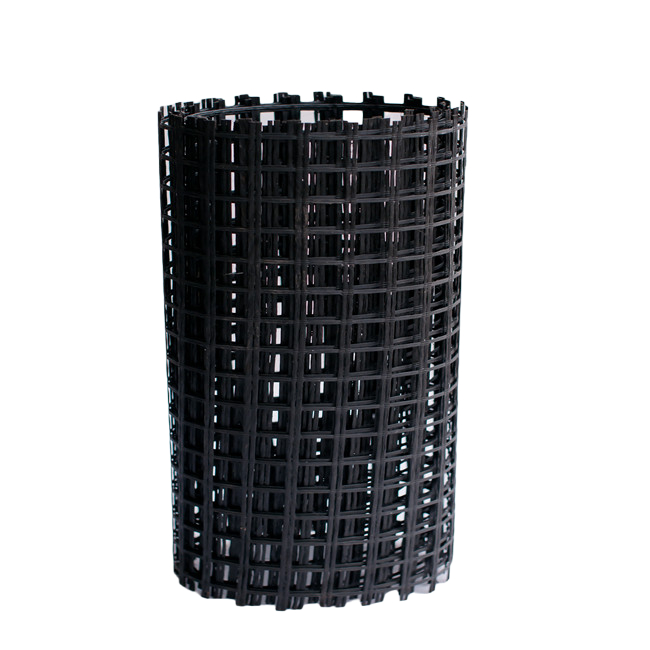
Geogrid is a common reinforcement material in road reconstruction subgrade stabilization. Its functions include:
- Stress distribution. When embedded in the newly filled subgrade, the geogrid distributes upper loads over a wider area through friction and interlocking with soil, reducing local stress concentration.
- Deformation restraint. The tensile strength of the geogrid restrains lateral deformation of the fill, improving overall subgrade stability and reducing post-construction settlement of the newly filled section.
- Deformation coordination. The geogrid spans across the old-new subgrade interface, linking the deformation of the new subgrade with the old roadbed, so that the settlement difference transitions smoothly rather than abruptly at the junction.
- Improved compaction effect. Geogrid layers are laid in between compacted soil lifts, enhancing the overall integrity of the subgrade structure.
Proper use of geogrid reinforcement effectively mitigates splicing settlement between old and new roadbeds, and is one of the standard practices in reconstruction projects.
4. Common Construction Pitfalls
Several common mistakes undermine reinforcement effectiveness:
- Wrong geogrid selection. Different conditions require different geogrid strengths and moduli. Arbitrary selection results in insufficient reinforcement.
- Insufficient layer count. Laying only the minimum number of layers provides inadequate reinforcement against later settlement.
- Overlap length too short. Short overlaps between geogrid rolls open up under deformation, defeating the overall reinforcement effect.
- Inadequate step excavation at the interface. Failure to excavate steps at the old-new subgrade interface reduces interlocking between new and old soil, increasing overall sliding risk.
- Poor fill material. Using substandard fill for the new subgrade causes high self-settlement that even geogrid cannot control.
- Inadequate compaction. Insufficient rolling leads to low subgrade density and inevitably large later settlement.
5. Overall Reinforcement Solution
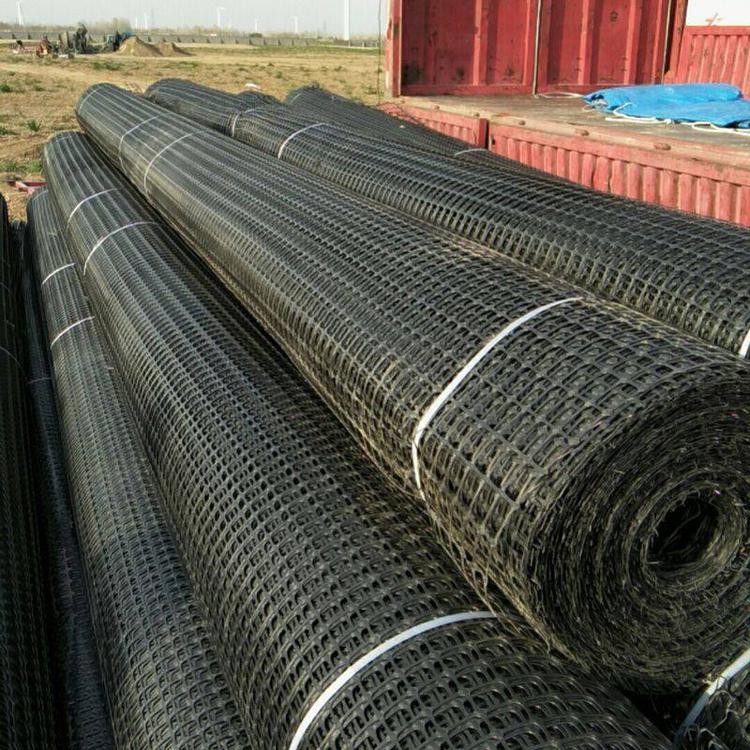
For uneven settlement in reconstruction projects, a comprehensive reinforcement plan typically includes:
(1) Site investigation and condition assessment
Before starting, assess the existing road condition, foundation conditions, fill height, and hydrological conditions, evaluate settlement risk, and determine the number of geogrid layers, geogrid parameters, and treatment depth.
(2) Step excavation and foundation treatment
Excavate steps at the old-new subgrade interface according to specification, with step width and height meeting requirements to ensure tight interlocking of new and old soil. Treat weak foundation before laying geogrid and filling.
(3) Layered geogrid installation
Lay the geogrid in design layers between soil lifts. The geogrid should be laid flat, tensioned, and fixed, with overlap length meeting requirements, forming an integrated reinforced structure between layers.
(4) Fill and compaction control
Use qualified fill material for the new subgrade, place and compact in lifts, and verify compaction of each layer before laying the next. Fill and compaction are the foundation of subgrade stability and cannot be skipped.
(5) Integrated drainage system
Coordinate subgrade reinforcement with pavement structure and drainage systems to prevent water from seeping into the subgrade and worsening settlement.
(6) Process inspection
Inspect compaction, geogrid placement quality, and overlap quality layer by layer during construction. Rectify problems immediately rather than carrying hidden defects into the next process.
6. Common Owner Concerns
Owners of reconstruction reinforcement projects typically worry:
- Whether settlement is truly controlled and whether cracking will recur after opening.
- Whether geogrid materials meet strength and modulus specifications without substitution.
- Whether concealed works like step excavation and overlap are done to standard, as they cannot be seen on the surface.
- Whether the reinforcement process will delay the overall schedule given traffic control and phased construction.
- Who is responsible if problems arise when materials, construction, and design are contracted separately.
7. Value of Turnkey Material-and-Labor Contracting
For reconstruction subgrade reinforcement projects with high technical requirements and tight material-construction integration, a turnkey material-and-labor package is a reliable approach:
- One team owns the whole solution. From site assessment, geogrid selection, step treatment to layered placement, one team follows a unified plan, with materials matching construction.
- Material quality guaranteed. The turnkey contractor is responsible for geogrid and other materials, ensuring specifications and strength meet requirements.
- Standardized construction. Layered placement, overlaps, and compaction follow specifications, with process records for traceable reinforcement quality.
- Schedule controlled. Material supply and site construction are coordinated together, matching the traffic control schedule without delaying the overall project.
- Single point of responsibility. If reinforcement quality issues arise, the turnkey contractor is fully responsible, avoiding disputes between material suppliers and construction crews.
Uneven subgrade settlement in road reconstruction is an old problem with mature solutions. Choose the right reinforcement approach, execute layered construction properly, and supervise concealed works carefully to control settlement risk.


